
As Marvel Rivals continues to evolve in 2026, NetEase Games’ popular hero-shooter finds itself at the center of a community-wide debate. The catalyst? The introduction of Chrono Shield Cards as part of the recent Galacta’s Gift anniversary event. While the event itself, celebrating the game’s journey since its Closed Alpha, offers celebratory rewards like Nameplates, Sprays, and a Costume Coin, it is this specific item that has ignited discussions about the very foundation of competitive play. The item, a free reward obtainable through the event pass, debuted earlier this month, but its shadow loomed large even before release, with players questioning its potential impact on the game’s ranked ladder integrity.
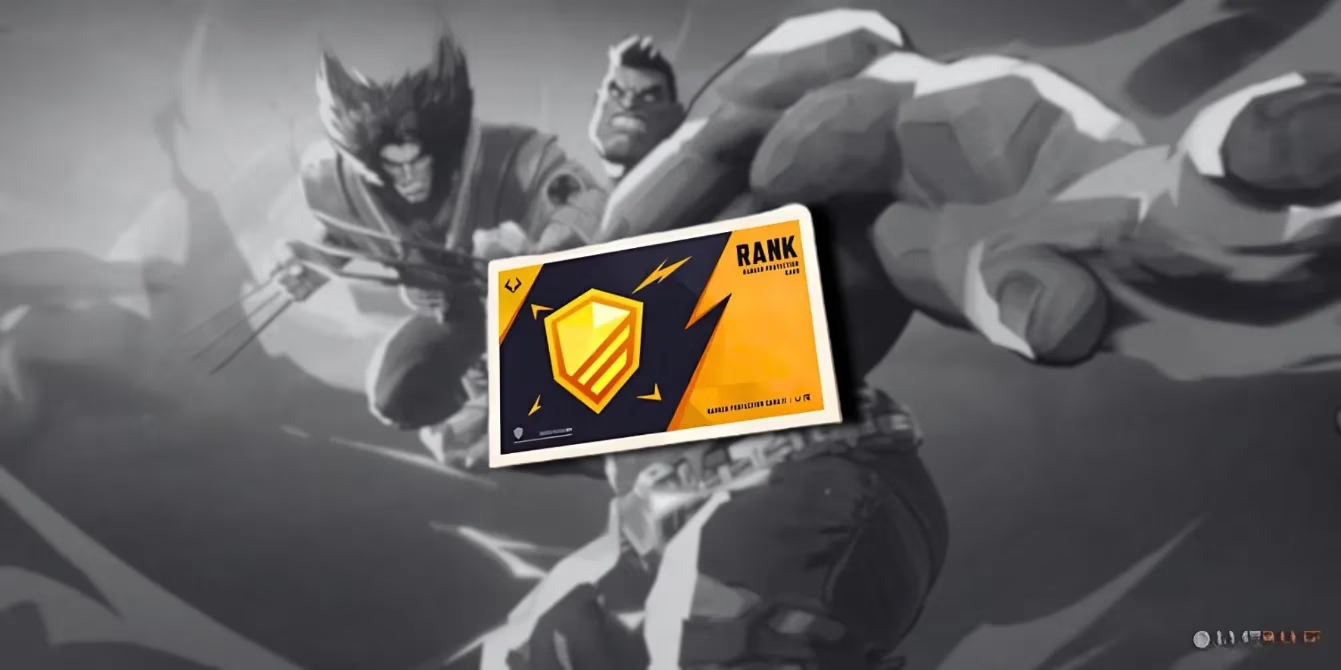
The Mechanics: Chrono Shields vs. Chrono Shield Cards
To understand the controversy, one must first understand the system. Since its debut in late 2024, Marvel Rivals has featured Chrono Shields as a core part of its ranked experience. This mechanic functions as a loss-prevention buffer. In most competitive titles, consecutive losses directly lead to rank demotion. Chrono Shields alter this by blocking the impact of one loss, though they then enter a cooldown period, making the player vulnerable on the next defeat. For veterans of team-based shooters, this is reminiscent of systems like Overwatch 2‘s Demotion Protection, which activates when a player’s internal rank progress dips below a certain threshold.
The community had largely reached an equilibrium with the standard Chrono Shield. However, the introduction of Chrono Shield Cards in Season 2 has disrupted this balance. What is the key difference? Unlike the passive, match-earned Chrono Shields, these cards are consumable items that can be activated at will to nullify the ranked point loss from a defeat. Players are capped at holding 20 cards per season, with any unused cards expiring when the season concludes. Through the Galacta’s Gift missions, participants can earn up to 8 of these cards.
The Pay-to-Win Fear and Developer Assurance
The initial announcement sent shockwaves through the player base, primarily fueled by one terrifying question: Could these cards be purchased? The specter of a pay-to-not-lose system, where players could theoretically buy their way out of negative consequences, threatened to undermine competitive fairness. Imagine a scenario where a well-funded player could simply purchase immunity from a losing streak—how would that sit with the community striving for skill-based progression?
Thankfully, NetEase Games moved swiftly to address these concerns. Taking to social media platforms, the developers issued a clear statement: “Both Chrono Shield Tokens from ranked matches and Chrono Shield Cards from events will not be for sale and are only usable for Gold rank and below.” They elaborated that the design philosophy is “to allow lower-ranked players to enter ranked mode with even less pressure through this mechanism.” This assurance quelled the most immediate fears of monetization but opened the door to a new, more nuanced debate.
The Competitive Fairness Dilemma
Even with the restrictions—non-purchasable and inert for Platinum rank and above—a significant portion of the community remains uneasy. Critics argue that the ranked climb in Marvel Rivals is already accessible. The concern is that with enough time investment, a player could theoretically ascend to higher tiers without maintaining a positive win-rate, especially when aided by tools that erase losses. For players seeking a purely meritocratic environment, the cards represent an unwelcome safety net.
Let’s break down the core arguments against Chrono Shield Cards:
-
Defeats the ‘Grind’: Competitive gaming is built on the concept of effort, improvement, and dealing with setbacks. A “get-out-of-jail-free” card, critics say, diminishes the value of the grind and the emotional weight of a loss, which is often a powerful motivator for improvement.
-
Potential for Toxic Behavior: A worrying possibility is that these cards could enable or excuse poor sportsmanship. Could a player who decides to “throw” a match or engage in trolling justify their actions by simply planning to use a card afterward? This potential to mitigate the consequences of not trying is a serious concern for match quality.
-
Diluting Ranked Meaning: If ranks can be influenced by consumable items, even if free and restricted, does it slightly erode the prestige of achieving a certain tier? Is a Gold rank earned with the help of several loss-prevention cards viewed the same as one earned without?
The Case for the Cards: Reducing Pressure and Encouraging Play
On the other side of the debate, many players have welcomed the addition. Their perspective is often rooted in the realities of being an adult gamer in 2026. After a demanding day of work or other responsibilities, the pressure of ranked play can feel overwhelming. The Chrono Shield Card is seen as a merciful feature—a way to offset a single frustrating loss without derailing an entire evening’s progress. It functions as a small buffer against the volatility of team-based matchmaking.
Proponents also emphasize the targeted nature of the feature. As NetEase stated, it’s exclusively for Gold rank and below. This frames it not as a tool for the highly competitive elite, but as a confidence-boosting mechanism for the game’s broader, more casual ranked audience. The goal, as echoed by supporters, is to lower the barrier to entry for ranked mode, making it less intimidating and helping more players feel comfortable striving for—and achieving—those Gold-ranked rewards. From this viewpoint, the cards are a quality-of-life improvement that supports player retention and enjoyment.
The Verdict? A Community Divided
As Marvel Rivals moves forward in 2026, the Chrono Shield Card debate highlights a fundamental tension in modern live-service gaming: balancing competitive purity with accessibility and player comfort. NetEase has drawn a line by making them free and restricting their use, attempting to cater to the casual majority without alienating the competitive core. Only time and data will tell if this implementation strikes the right balance. Will it successfully ease pressure on newer players, or will it inadvertently foster complacency or toxicity? The community’s ongoing discussion is a testament to how deeply players care about the ecosystem of the games they love. For now, the shield cards remain a gift from Galacta that is as controversial as it is intriguing.