
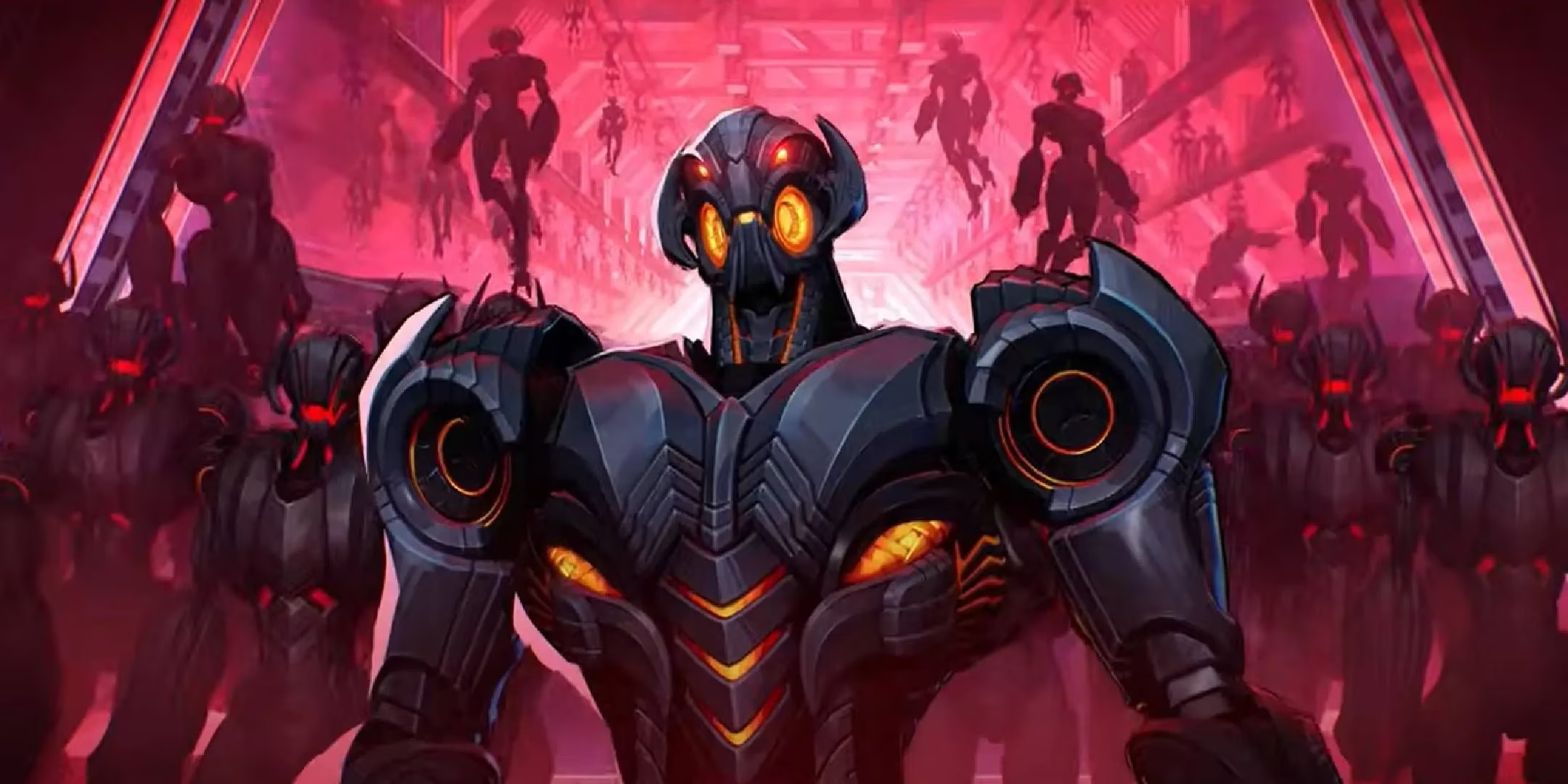
I remember the buzz and the subsequent wave of skepticism that flooded the community forums back in May 2026. As a dedicated Marvel Rivals player, I was glued to my screen, watching the early access gameplay of Ultron, the new Strategist slated for the Season 2.5 update. The sentiment was overwhelmingly negative; a chorus of voices, including my own initial thoughts, echoed the sentiment that there was simply “no reason to pick him.” The primary concern? His seemingly anemic healing capabilities. For a character labeled a Strategist, a role synonymous with team support and sustain, his one non-ultimate healing ability felt like a mere trickle. The irony was palpable—his powerful team-up synergy with Iron Man, which granted a healing primary fire, was locked behind a specific interaction, not part of his core kit. It felt like NetEase was giving us a duelist in Strategist’s clothing, a sentiment many of us shared on social platforms. We questioned the homogenization of roles and wondered if Ultron would be dead on arrival, a liability in any team composition.
The Duality of a Strategist-Duelist Hybrid
My first hands-on session with Ultron on May 30th was a lesson in preconceived notions. Yes, his direct healing prowess was limited. The radius of his repair field was indeed tight, demanding precise positioning. However, I began to see the other facets of his design that the early critiques had overshadowed. He wasn’t a pure healer; he was a unique hybrid, a high-mobility artillery platform. His primary fire had infinite range and negligible damage falloff, allowing me to pressure enemies from absurd distances. As the only flying Strategist, he offered unparalleled verticality and map control. This wasn’t a character who healed from the backline; this was a character who could secure key angles, disrupt enemy formations, and then zip in to deliver a crucial, albeit small, area-of-effect heal. The community member GigaAkais’s pre-release comment resonated deeply: “I will still play him and make the most of whatever they give us.” That became my mantra. I stopped trying to force him into a traditional healing role and started exploring his duelist potential.
Discovering the Meta and New Tech
It was too early to call for immediate buffs. History had taught us that with Human Torch, whose initial perception of being overpowered gave way to him being considered underpowered on release, only to find his niche later. The depth of Marvel Rivals team compositions meant that novelty often precedes optimization. In the weeks following his release, our collective understanding evolved. We discovered that Ultron’s value wasn’t in raw healing output, but in his ability to create space and sustain through pressure. His ultimate ability, when combined with a coordinated team, could zone control entire objectives. Players began to master the timing of his Iron Man team-up, using it not just for the healing primary fire, but for the burst damage combo it enabled. He became a strategic pick for maps with long sightlines and verticality, a counter to certain static compositions.
NetEase’s Responsiveness and the Evolving Landscape
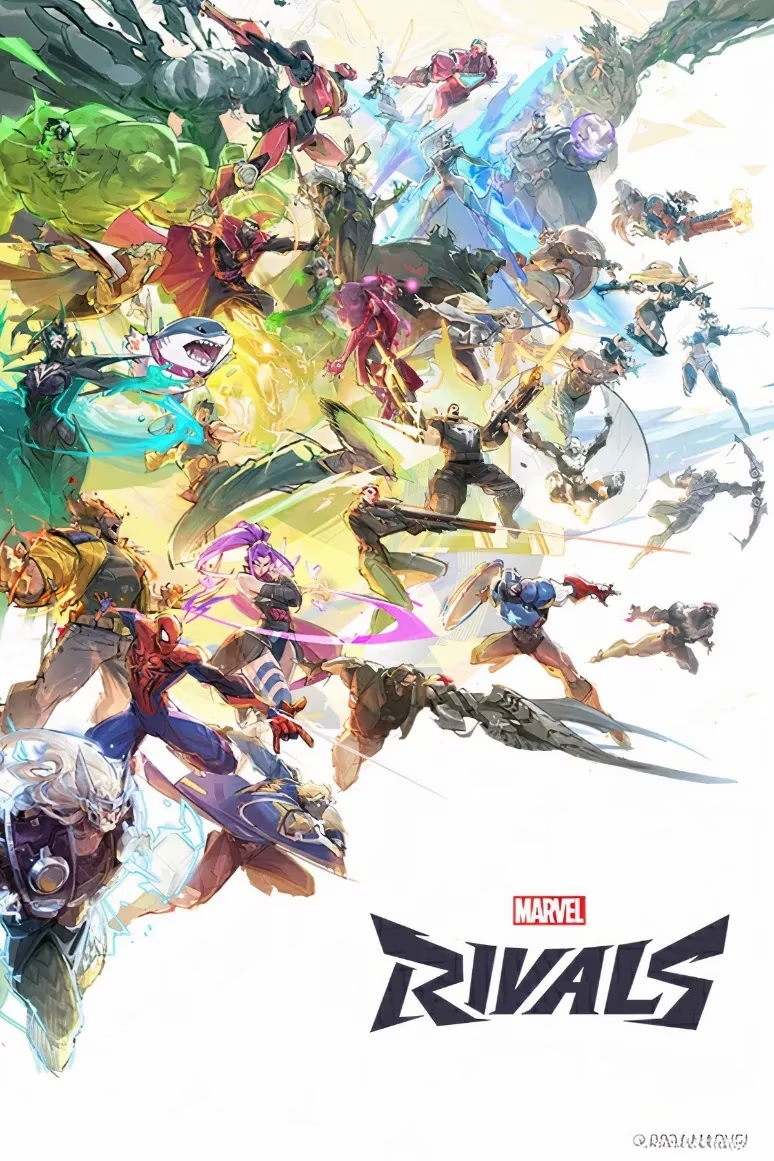
True to their track record, NetEase Games was monitoring the feedback. While they didn’t completely rework him overnight, subtle adjustments were made in subsequent patches. Tweaks to his ability cooldowns and a slight increase to his repair field’s effectiveness showed they were listening. The initial negative impressions, while a shaky start, ultimately fueled a more nuanced discussion about role flexibility within the game. Ultron challenged the rigid definition of a “Strategist.” He proved that utility could come in forms other than massive healing numbers. For fans of the character, seeing the iconic villain finally join the extensive roster was a thrill, regardless of the meta debates.
My Verdict and the Journey of Mastery
Looking back from 2026, my journey with Ultron has been one of the most rewarding in Marvel Rivals. He forced me to adapt my playstyle and think more strategically about positioning and target priority. He isn’t an easy pick-up-and-play hero, nor is he a must-pick for every scenario. His power lies in a skilled pilot who can leverage his unique toolkit:
-
🎯 Infinite-Range Harassment: Constantly pressure backline supports and snipers.
-
✈️ Aerial Dominance: Control high ground and escape routes unavailable to other Strategists.
-
⚡ Burst Synergy: Maximize damage output during the Iron Man team-up window.
-
🛡️ Precision Sustenance: Use his repair field to save critical allies in clutch moments, not to top off health pools.
He may have entered the fray amid a storm of doubt, but Ultron carved out his own distinct niche. He serves as a perfect reminder that in the ever-evolving meta of a live-service game, first impressions are just that—first impressions. True strength and utility are often revealed not on the drawing board, but in the heat of battle, through the creativity and perseverance of the player base. I’m glad I looked past the initial gloom and gave the mechanized menace a chance.