
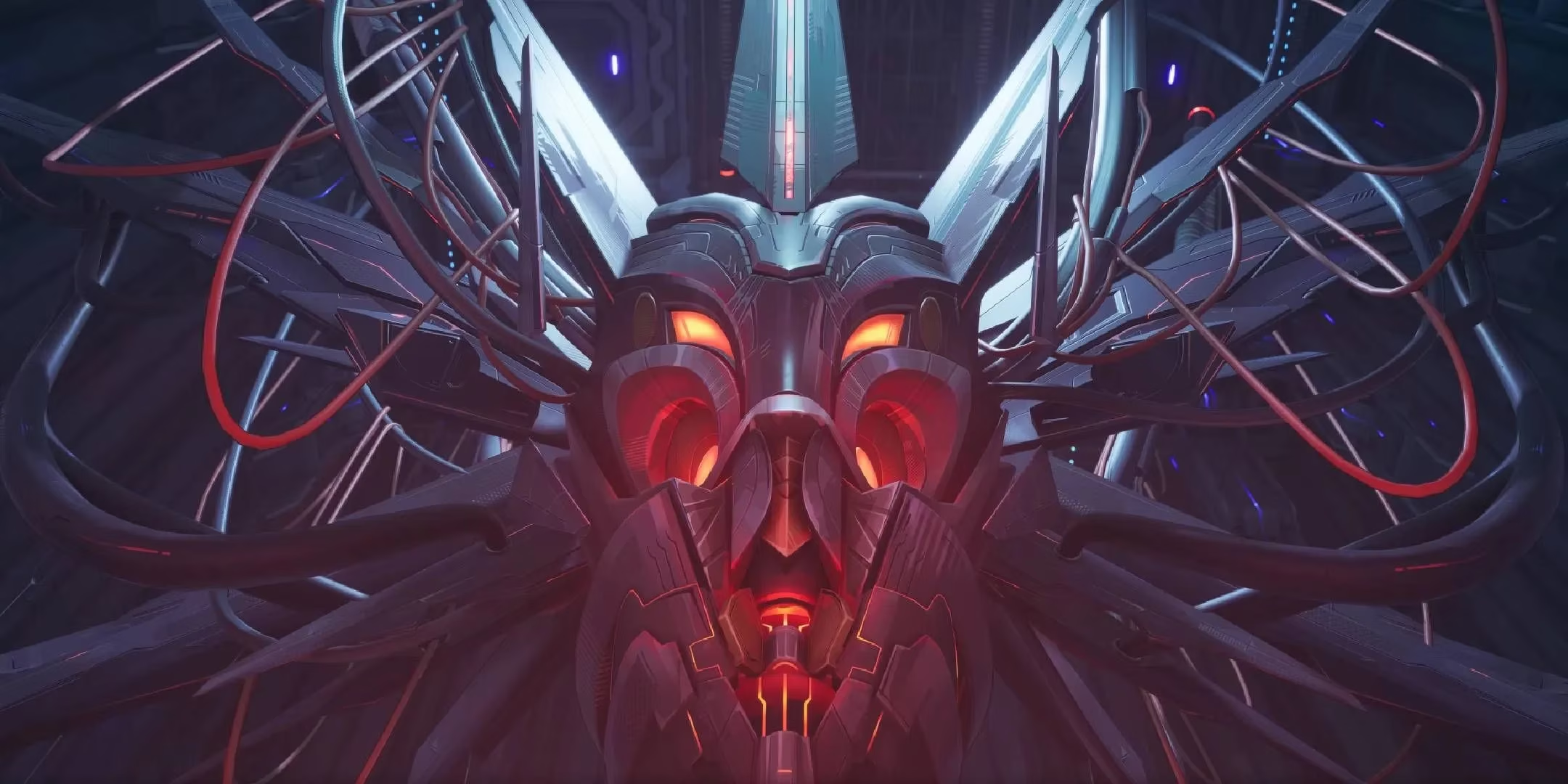
In the ever-evolving battlegrounds of Marvel Rivals, the Season 2.5 update of 2025 introduced Arakko, a sister island to the mutant haven of Krakoa, now twisted into a metallic nightmare by the Strategist character, Ultron. This corrupted labyrinth, devoid of all organic life, was meant to be a stunning new Convoy map where one team escorts an objective from one end to the other. However, what arrived was less a strategic playground and more a disorienting maze that left players on both offense and defense feeling utterly lost. The community’s frustration was palpable, with many declaring Arakko one of the most confusing map designs in the game’s history, a sentiment that echoed through forums and shaped the conversation around map design for years to come.
The Heart of the Confusion
Navigating Arakko was like trying to find a specific cog in a vast, malfunctioning clockwork—every corridor and wall was crafted from the same gleaming, sterile metal, creating a visual monotony that disoriented even seasoned players. Unlike the distinct, celebrated environments of New York or the original Krakoa maps, Arakko suffered from what players termed a “samey” architecture. The hallways branched into undefined paths, with lethal drops often poorly communicated, turning what should have been a tactical flank into a fatal misstep. Players reported getting lost multiple times in a single match, struggling to find their team or the objective. The map’s design, while thematically perfect for Ultron’s vision of a harmonious, sterile world, functioned like a hall of mirrors in practice, where every reflection looked identical and led nowhere familiar.
A Lesson in Visual Communication
The core issue with Arakko wasn’t its theme but its execution. While packed with clever Easter eggs and a cohesive visual story tied to Ultron’s corruption, it prioritized aesthetic consistency over gameplay clarity. Landmarks were nonexistent; the map was a sea of identical metallic surfaces. This made advanced tactics, like flanking opponents or using shortcuts to rejoin a fight after being eliminated, nearly impossible to execute consistently. For a game reliant on team coordination and spatial awareness, Arakko became a frustrating bottleneck. The community’s feedback was clear: a beautiful map that players cannot intuitively navigate is a failed map. This lesson became a cornerstone for NetEase’s future design philosophy.
The Path Forward: From Arakko to Clarity
The legacy of Arakko is not one of mere failure, but of a valuable, if painful, lesson learned. By the time Marvel Rivals approached its content in 2026, the principles for successful map design had been refined. Future environments, while still rich with thematic detail, began to prioritize:
-
Clear Visual Language: Using distinct textures, lighting, and set pieces to create memorable landmarks.
-
Intuitive Pathing: Ensuring multiple routes exist but are logically differentiated and easy to recall.
-
Functional Beauty: Balancing artistic vision with gameplay readability, ensuring style never sacrificed function.
Maps released after Arakko, and the beloved Yggdrasill Path or Spider-Islands that preceded it, succeeded because they mastered this balance. They proved that a map could tell a story—whether it’s the organic weave of Asgard or the chaotic vibrancy of a Spider-Verse outpost—without leaving its players feeling stranded in a featureless metal desert.
The Evolving Battlefield
Arakko stands as a permanent fixture in the game’s roster, a testament to Ultron’s ingame reign and a challenging, if controversial, arena for the most dedicated players. Its confusing corridors are now a known quantity, a puzzle that teams have learned to solve through sheer repetition. Yet, its release marked a turning point. It taught developers and players alike that in the competitive cosmos of Marvel Rivals, a map must be more than a backdrop; it must be a coherent, navigable stage for the superhero drama unfolding upon it. The sterile symphony of Arakko’s design, while initially a cacophony of confusion, ultimately helped compose a clearer, more player-friendly future for all the battles yet to come. The map remains, not as a favorite, but as a crucial chapter in the game’s history—a complex maze that ultimately helped chart a straighter course for everything that followed.